
 MeshLine
How to replace Zapier sprawl with one integrated operations system
Zapier sprawl is usually a sign that the company outgrew isolated automations and now needs one visible execution layer.
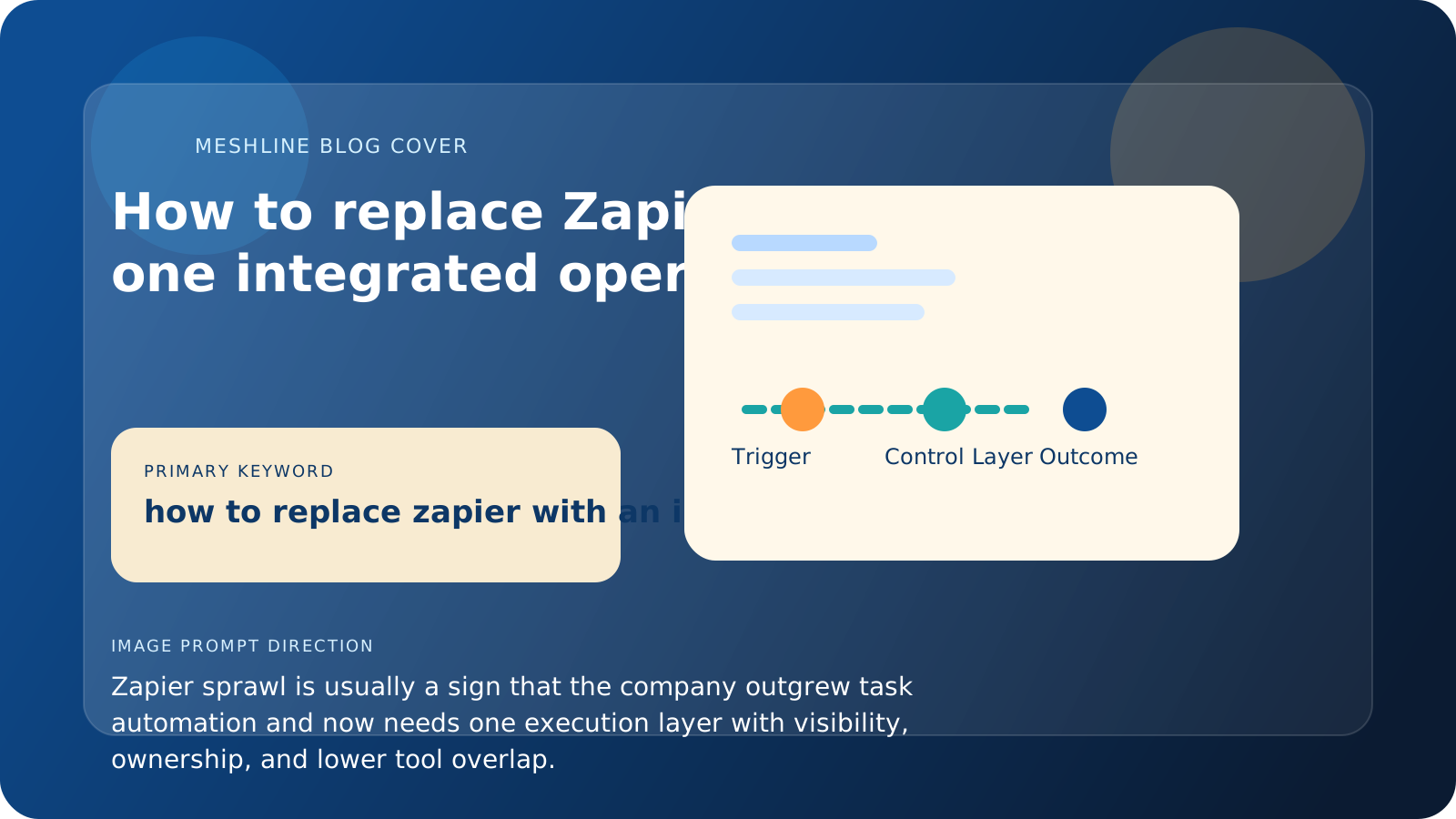
How to replace Zapier sprawl with one integrated operations system
Zapier sprawl is usually a sign that the company outgrew isolated automations and now needs one visible execution layer.
Replace Zapier sprawl with one integrated operations system
Replacing Zapier sprawl with one integrated operations system starts by consolidating trigger logic, owner changes, and exception handling into one visible control layer.
One integration fixes a handoff. One automation saves a person a few clicks. One alert makes the workflow feel more responsive.
The trouble starts when the business scales and the zaps become the business logic.
At that point, you are no longer using an automation tool to support the workflow. You are using dozens of fragmented automations to imitate an operating system.
That is what teams mean when they say they have Zapier sprawl.
Meshline's view is that Zapier sprawl becomes expensive when the business can no longer explain which zap owns the trigger, which one owns the status, and who owns the exception. That is the moment automation turns into hidden infrastructure debt.
What Zapier sprawl actually looks like
It does not just mean you have many automations.
It means the workflow depends on too many disconnected rules, too many narrow fixes, and too little shared visibility.
The marketing team has one set of zaps. Operations has another. Revenue has another. Finance depends on outputs from Stripe, HubSpot, or Salesforce. Commerce data might come through Shopify. Internal planning lives in Notion or Airtable. Team alerts go through Slack.
Each automation looks useful in isolation. But when exceptions happen, nobody can see the full control path.
That is when people start comparing Zapier to Make or n8n. Sometimes that is the right comparison. But often the deeper issue is not which automation tool is cheaper or more flexible. The deeper issue is that the company has outgrown app-to-app patching and needs one integrated execution model.
A concrete example is a lead workflow that starts in HubSpot, charges through Stripe, creates delivery tasks in Asana, posts alerts in Slack, and updates revenue status in Airtable. If different zaps own owner assignment, billing status, and completion reporting, the team is really maintaining a distributed operating model by hand.
That is also why the Meshline angle matters here. Workflow Orchestrator, Event Routing Console, and the Automation glossary give the business one place to define the control path before it starts deleting or migrating automations.
The moment automation becomes infrastructure
A workflow crosses into infrastructure territory when four things become true.
The automation is now business critical.
Multiple departments depend on the same state.
Exceptions matter more than the happy path.
Leaders need to know not just whether a step fired, but whether the system delivered the intended outcome.
When those conditions appear, a collection of narrow automations starts to feel brittle because it was never built to act like one operating layer.
The field-level signal is duplicate truth. One zap writes status, another writes paid, a third writes owner, and nobody can tell which one should win after a retry. Once that happens, the stack needs orchestration more than more automation.
A common warning sign teams ignore
The most dangerous sign is not a failed zap. It is a workflow that technically runs but still needs manual cleanup every week.
Maybe one zap creates the record.
Another sends the alert.
Another updates the project board.
Another writes data into a sheet.
Then someone on the team still checks the final result because nobody fully trusts the automation chain.
That is no longer efficient automation. That is automation debt.
Trigger, owner, exception path, and outcome
A better replacement model begins with four visible elements. Trigger: one event starts the workflow once. Owner: one team is responsible for the next movement step. Exception path: failed writes, missing data, approval conflicts, or duplicate records enter a visible queue. Outcome: the business can prove the process completed without checking three different zaps. If those four remain fragmented, the sprawl will simply reappear in the next tool.
Why replacing Zapier with another automation tool is only a partial fix
Moving from Zapier to another tool can reduce cost or improve flexibility. That can be a smart move.
But if the underlying model is still dozens of disconnected flows with separate logic, separate ownership, and separate reporting, you have not actually solved the operating problem.
You have only moved the sprawl.
An integrated operations system does something different.
It treats the workflow as one managed path from trigger to decision to action to outcome.
That means the business logic becomes visible. Review points become explicit. Exceptions can be handled with structure. Reporting reflects the real workflow state instead of a pile of side effects.
What an integrated operations system should do
If you are replacing Zapier sprawl, the goal is not just fewer automations. The goal is a cleaner execution model.
A better system should give you:
One visible place to understand how work moves.
One decision layer for routing, approvals, and exceptions.
One way to connect core systems without multiplying duplicate rules.
One operating record for what happened and why.
That is the difference between automation and operations infrastructure.
How to migrate without breaking everything
Do not try to replace every zap at once.
Start with the workflows that are both critical and hard to explain.
Group them by business outcome, not by app.
That means looking at intake to qualification, quote to approval, order to reporting, support event to escalation, or onboarding to delivery.
Once you map the workflow by outcome, the overlap becomes visible. Multiple automations are often doing narrow pieces of the same process because no single system owns the full control path.
That is the right consolidation point.
A practical consolidation checklist
Review every automation and ask five questions.
Does it move data, make a decision, send an alert, trigger a task, or patch over a missing state model?
If it only exists because another automation cannot see the full workflow, it is a consolidation candidate.
If nobody can explain what breaks when it fails, it is a documentation risk.
If two tools are both storing the same stage or status, it is a control risk.
If the team still double-checks the final result manually, it is a trust risk.
Those are the signals that the workflow is ready to graduate from app-to-app glue into one integrated operating layer.
Implementation checklist for replacing Zapier sprawl
- Group automations by business outcome instead of by app.
- Choose one authoritative owner for key fields such as status, owner, and completion state.
- Validate required data before downstream automations fire.
- Route failed runs into a replayable exception queue instead of silent retries only.
- Keep one operating record so teams can inspect what happened end to end.
Where Meshline fits
Meshline is useful here because it reframes the problem correctly.
The business does not just need a new automation builder. It needs one integrated system that can sit above the existing stack and make that stack behave like one coherent operating environment.
That reduces tool overlap.
It reduces invisible handoffs.
It reduces the number of places where your team has to debug the workflow manually.
And importantly, it gives the company an ownership path. Instead of renting more glue forever, you build a visible system for recurring execution.
Why sprawl feels manageable until it suddenly does not
Automation sprawl often grows quietly because each new zap solves a real problem. The system feels fine until one customer-facing workflow, revenue workflow, or approval path starts depending on a web of small automations that nobody can explain end to end. At that point, the stack is no longer lightweight. It is a fragile operating dependency.
The issue is less about volume than trust. If the team cannot see the decision path clearly, it will keep creating side processes to compensate.
What consolidation should preserve
Good consolidation should preserve flexibility without preserving confusion. The point is not to remove every useful automation. It is to move the workflow logic into one visible layer so the business can still adapt while gaining control.