
 MeshLine
Blog publishing breaks when no system owns the release
Learn why revenue ops teams should treat blog publishing like infrastructure so approvals, release readiness, exports, and reporting stay reliable across one governed publishing system.
Blog publishing breaks when no system owns the release
Blog publishing automation usually breaks long before the CMS button is clicked. The real failure starts when briefs live in one doc, assets in another folder, SEO notes in chat, approvals in a task board, and publish readiness inside somebody's head. Teams can look productive while still lacking one trustworthy system for what is ready, what is blocked, and who owns the next release decision.
Blog publishing breaks when no system owns the release
Blog publishing breaks when no system owns the release because approvals, exports, release readiness, and downstream reporting all drift when no workflow owns the publish state end to end.
Why revenue ops teams should treat blog publishing like infrastructure
Revenue ops teams should treat blog publishing like infrastructure when approvals, release readiness, and system exports all affect whether published content actually supports downstream execution.
For buyers searching terms like blog publishing workflow, content approval workflow, editorial workflow automation, or SEO publishing process, the real intent is not just to move drafts faster. It is to create a repeatable publishing system that can ship reliably without forcing operators to reconcile every handoff manually.
Why this workflow breaks
Most teams already own the apps involved in publishing. What they do not have is one execution path that can carry a piece from intake through approval, QA, and live release without losing context. That is why blog publishing slows down exactly when volume rises, launch dates tighten, or multiple stakeholders need to sign off.
The typical fixes rarely solve the real issue. One team adds more project management. Another team adds more editorial review meetings. Another team adds AI drafting tools and assumes the extra speed at the top of the funnel will solve everything downstream. In practice, each of those moves creates more activity without solving ownership. The workflow still depends on humans to discover blockers, translate status, and push the next action through.
Trigger, process, and outcome for blog publishing
Strong publishing teams define the workflow more concretely:
- Trigger: a brief, campaign request, or editorial commitment is approved for production.
- Process: draft, review, asset prep, QA, and publish readiness are tracked in one governed status model.
- Outcome: the article goes live with the right metadata, approvals, and reporting attached to the same release record.
A better operating design
1. Capture the trigger once
Start with one reliable intake point and define what should happen immediately after the signal lands. That might be an approved topic, a refresh request, a product launch, or a customer pain point that needs a search-facing page. The key is that the workflow should not restart from scratch every time a new article enters the queue.
2. Route the next action automatically
Use rules and context so the workflow advances without asking a human to move the work forward. Drafting, factual review, SEO QA, brand approval, and publish readiness should each have a visible state and a clear owner.
3. Review exceptions, not every task
Operators should step in for approvals, quality control, and edge cases. They should not be the glue between every tool.
Where Meshline fits
The useful shift is to treat blog publishing as a governed release workflow instead of a series of content tasks. One system should own intake, one status model should define readiness, and every exception should have an explicit next action instead of disappearing into chat, comments, or meeting notes.
Final takeaway
If the current stack still needs people to coordinate every handoff, the workflow is not automated. It is only partially assisted. The next move is to design around execution quality first, then implement the publishing workflow in a system that can actually hold ownership, approvals, and release readiness together.
Source links
Why Meshline fits
Meshline is relevant here because it treats blog publishing as an operating layer problem. Instead of asking people to bridge blog publishing manually, it keeps trigger, process, review, and outcome inside one execution layer with clear ownership.
That operating model gives teams visibility into what is drafted, what is blocked, who owns approval, and what is safe to publish next.
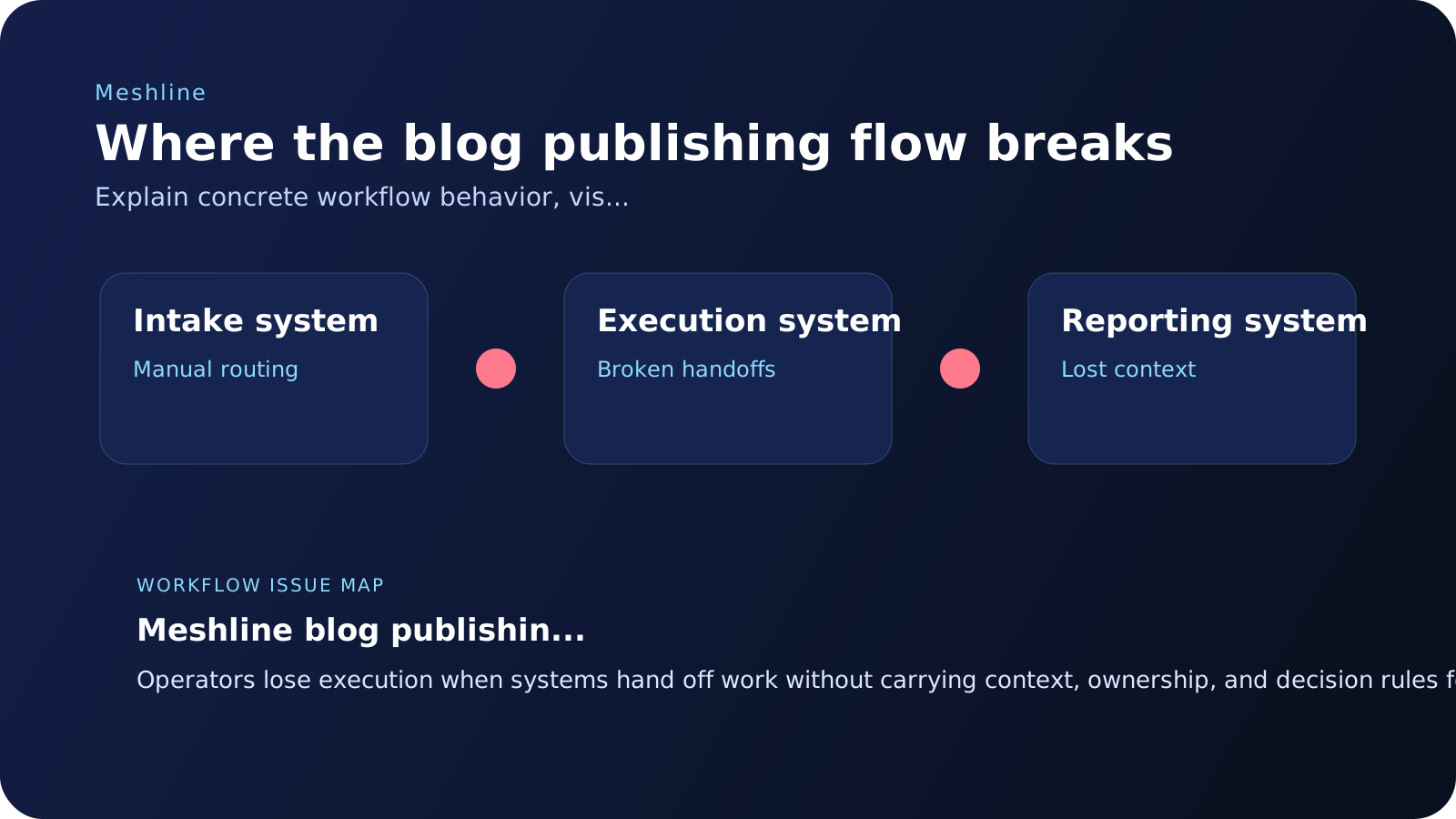
Where founders lose execution without noticing
Founders usually notice blog publishing only after the customer experience or internal trust has already degraded. The delay happens because the process can look busy while still failing at the ownership layer.
A stage might appear complete in one tool while the real decision, exception handling, or reporting work is still floating between people. That creates the illusion of progress without a reliable outcome.
This is why operational debt builds quietly. The work moves, but the system does not hold the context tightly enough to keep execution quality stable when volume, urgency, or exceptions increase.
A founder-grade operating blueprint
A stronger blueprint for blog publishing starts by defining the system instead of only configuring the apps inside it.
- Define the trigger and state owner
Choose the single source that recognizes when blog publishing has truly started, and decide which system owns the shared state after that moment.
- Define the decision layer
Document which rules should route, escalate, pause, or approve the work automatically, and which conditions still require a human operator.
- Define the execution surface
Map where the action actually happens, how completion is confirmed, and how the next stage is triggered without manual glue work.
- Define the audit and reporting layer
Make the system explainable. A founder should be able to see what triggered the work, what decision was applied, who owned the exception, and how the outcome was recorded.
How to measure whether the system is actually better
A workflow for blog publishing is only better if execution quality improves in ways the business can measure.
- Time from trigger to decision
- Percentage of work that moves without manual reconciliation
- Number of exceptions that require human intervention
- Time to resolution for blocked or escalated work
- Visibility into why the outcome happened
Those metrics matter more than the number of automations or connected tools. They show whether the company has built a governed system or just a faster version of the same coordination problem.
What to do next
What should a team do next if Meshline blog publishing ownership-friendly system exports is already underperforming? Start by documenting the trigger, the decision owner, the exception path, and the reporting surface. Then rebuild the flow around one governed system so execution quality does not depend on human glue work.
Founder audit checklist
Use this checklist before you call blog publishing automated:
- Can one person explain the trigger, routing rules, and final owner without opening five different tools?
- Is there a clear state owner when the workflow pauses, escalates, or hits an exception?
- Can the business see why a decision happened, not just that the task moved forward?
- Are operators reviewing only exceptions, or still acting as the glue between systems?
- Does reporting reflect the real outcome, or only the activity recorded by each app?
If the answer is still unclear, the business does not yet have autonomous operations infrastructure for blog publishing. It has a faster version of the same coordination problem. The point of the operating layer is not to create more motion. It is to create a system the team can trust when speed, volume, and exceptions all increase at once.
The category shift behind this workflow
This is not a tooling problem first. It is a category problem. Teams do not need another surface to click through. They need an execution layer that keeps ownership, routing, and reporting connected from trigger to outcome. That is the difference between partial assistance and actual autonomous operations infrastructure.
Recommended response
Revenue teams should document the source brief, owner, review gate, service-level expectation, exception path, and reporting destination before they call the workflow automated.