
 MeshLine
What to connect first in MeshLine for faster marketing execution
A practical guide to choosing the first marketing systems, sources, and destinations to connect so MeshLine can go live quickly.
What to connect first in MeshLine for faster marketing execution
What to connect first in Meshline
What to connect first in Meshline matters because the first connected systems determine how quickly the team can capture intent, route work, and prove value without rebuilding the whole stack.
If you are researching MeshLine, you are probably trying to solve a very practical problem: they want fast time to value, but they keep expanding the scope until the setup becomes another systems project. This article is written for operators deciding which systems belong in the first marketing rollout and which ones should wait, and it is designed to answer the questions a real buyer asks before rollout. What does setup look like? What does usage feel like after launch? How quickly can a focused project go live? And how does the system stay useful after the first workflow is already running?
MeshLine works best when it is understood as an operating layer, not as another workflow builder. The product sits above the tools you already use and turns trigger, process, and outcome into one visible system. In this case the best mental model is connect first. That lens matters because the strongest buyers are not shopping for another dashboard. They are looking for a faster, clearer way to move work from signal to outcome without losing human control.
For smaller, focused scopes, MeshLine can often go live inside two weeks. For broader enterprise implementations with more stakeholders, more systems, and more exception planning, the typical target is under 60 days. The right way to think about the timeline is not "How much can we connect?" It is "Which workflow creates the clearest business win once it is live?"
What the user experience is actually like when this works
The user experience of a good connection plan is surprisingly boring, and that is a compliment. The workflow should not depend on the operator remembering which folder, board, form, and browser tab currently contains the truth. It should feel obvious where the signal starts, where the context lives, where the decision gets made, and where the finished content lands.
This is where a lot of otherwise smart teams lose weeks. They confuse completeness with speed. MeshLine works best when the first marketing rollout connects only what is necessary to publish one high-quality piece repeatedly.
That is the lens that matters when you evaluate MeshLine. A real operator does not care whether the workflow looks clever in a diagram. They care whether the system removes the hidden handoff work, keeps the next action obvious, and gives the team enough visibility to trust the result.
The practical rollout model for connect first
1. Identify the real trigger instead of the loudest tool
Marketing teams often assume the first connection should be the fanciest platform in the stack. In practice, the right first connection is the source that starts the workflow. Sometimes that is Search Console data. Sometimes it is a founder note, a content brief, or a backlog row. If the trigger is wrong, the rest of the engine becomes harder to trust.
The reason this matters is that the operator experience gets worse every time the system starts from the wrong place. People end up duplicating tickets, re-opening docs, or manually translating inputs back into the workflow. Connecting the true trigger is how you make MeshLine feel native to the team instead of bolted on.
2. Connect the context source that removes the most weekly rework
After the trigger, the next priority is the source that gives the workflow enough context to produce something usable. That might be a transcript library, a research document, an approved positioning sheet, or a structured template for article briefs. If the workflow has to guess tone, audience, or intent, you are not saving time. You are simply moving the rework later.
This is why experienced operators connect one context source early and wait on the rest. It is better to have one trustworthy source of brand and workflow context than five half-connected repositories that require manual cleanup every time a post moves toward publication.
3. Close the loop with a real decision point and a real destination
The setup is not complete until the workflow has a place for human judgment and a place where the finished work lands. The decision point might be a review queue or admin panel. The destination might be the MeshLine site publishing workflow, a CMS, or a delivery system for downstream use. Without both, the system still relies on invisible coordination.
A connection plan that ends in a real destination is how teams shorten time to market. People stop asking, "Did this get published?" and start asking, "What should the engine work on next?" That shift is the whole point.
A realistic example of how this rollout feels in practice
Imagine a team using MeshLine in the exact context this article covers. In week one, they identify the trigger, the context source, the review surface, and the business outcome. In week two, they feed the system what a capable operator would normally carry in their head: structure, thresholds, rules, ownership, and exceptions. Once the workflow runs, the biggest change is not that work suddenly becomes magical. It is that the team no longer has to coordinate the basics manually.
That is usually the moment the category starts to make sense. The buyer realizes MeshLine is not competing with every app in the stack. It is giving the stack an execution layer. People stop asking who is waiting on what, whether the latest brief is the right one, or why the handoff failed silently. They can see the state, the next action, and the result.
This is also why MeshLine content should explain the lived workflow experience, not just the system diagram. Readers want to know what they will feel after launch: fewer handoff delays, fewer invisible dependencies, fewer spreadsheet patches, fewer reviews that start from scratch, and faster movement from signal to outcome. That is the conversion story because it matches the buyer's real day-to-day pain.
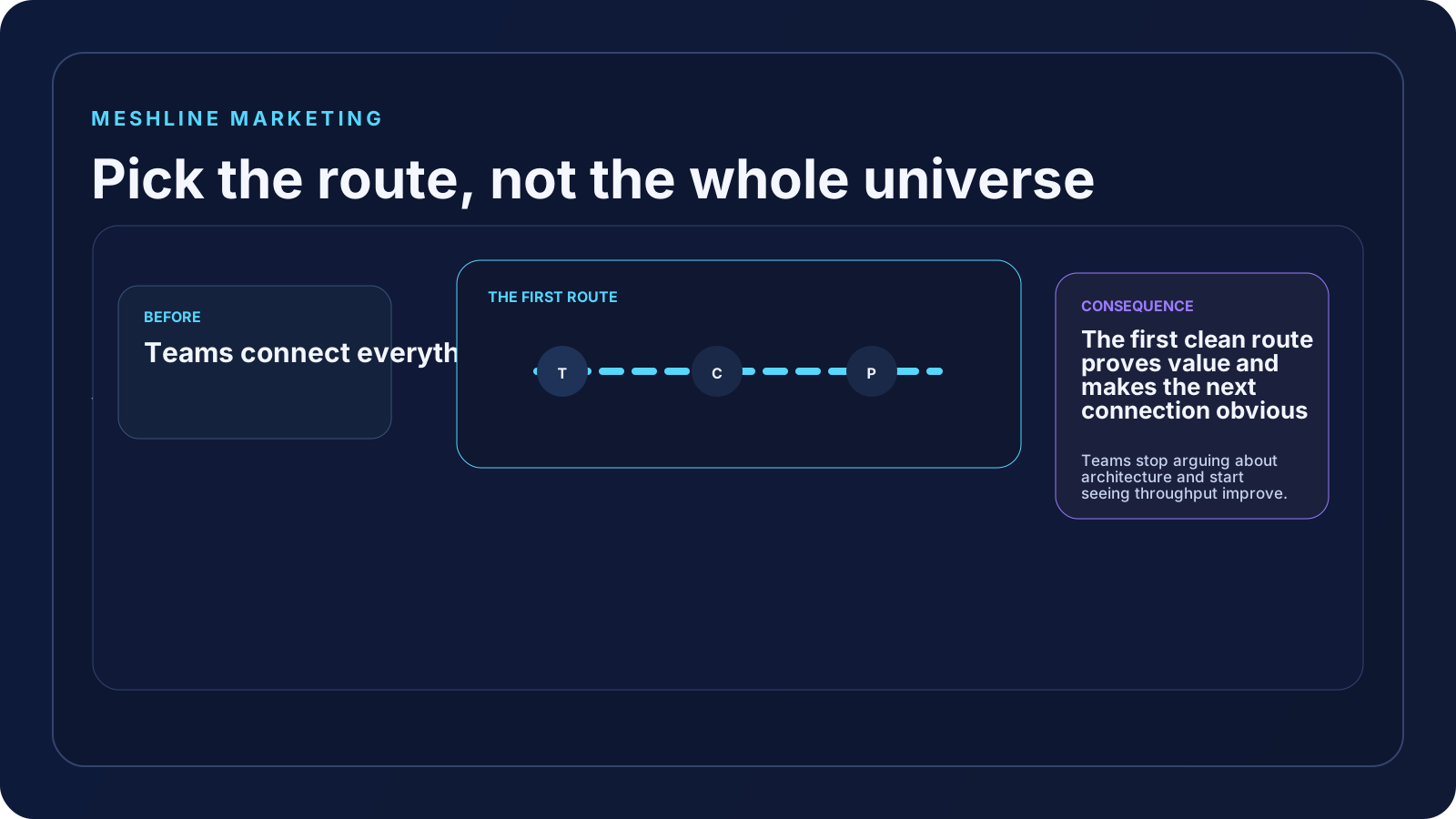
What connecting the right things first actually changes
What buyers usually need here is not generic possibility. They need to see concrete operating situations where MeshLine changes the user experience, shortens time to value, and removes hidden coordination work.
- Choosing the first four systems to connect for a weekly blog publishing workflow.
- Reducing scope on a messy content-ops setup so the team can ship one working process fast.
- Helping an agency launch a multi-client publishing rhythm without hand-built exception handling everywhere.
- Defining the minimal viable connection path for a founder-led content engine.
Questions real buyers ask in this situation
What should not be connected in the first rollout?
Anything that does not change the first workflow outcome. If a system does not contribute to trigger, context, review, or destination, it can usually wait until the first engine is already proving value.
What if two systems both look essential?
Ask which one removes more weekly rework. MeshLine should connect the source that improves operator confidence first, not the source that makes the architecture feel more complete.
How do we avoid over-connecting?
Use a single question: if this connection is missing, can we still publish one high-quality piece reliably? If the answer is yes, defer it.
Why is connection design important for SEO content ops?
Because SEO output depends on quality, cadence, and internal consistency. If the connection model is sloppy, the content engine will keep stalling on missing context or hidden approvals.
Can MeshLine grow from a narrow launch into a bigger content engine later?
Yes. That is the preferred motion. Launch the first route cleanly, then expand once the operator can trust the system.
Build the broader MeshLine reading path
If this post is doing its job, the reader should not stop here. They should be able to move deeper into the category, understand the surrounding workflows, and see how the same operating logic shows up across marketing, integrations, and revenue execution.
- From disconnected tools to a real operating layer: use this as adjacent reading so the buyer can keep learning inside the MeshLine category hub instead of bouncing back to search.
- Where AI agents actually create value for operations teams: use this as adjacent reading so the buyer can keep learning inside the MeshLine category hub instead of bouncing back to search.
- Why local-first automation systems create leverage faster: use this as adjacent reading so the buyer can keep learning inside the MeshLine category hub instead of bouncing back to search.
- Multi-Client Marketing Automation: An Orchestration Playbook for Agencies: use this as adjacent reading so the buyer can keep learning inside the MeshLine category hub instead of bouncing back to search.
- How Meshline turns content operations into one governed workflow: use this as adjacent reading so the buyer can keep learning inside the MeshLine category hub instead of bouncing back to search.
- How to run CRM-to-ERP support sync without manual coordination: use this as adjacent reading so the buyer can keep learning inside the MeshLine category hub instead of bouncing back to search.
- How to automate HubSpot and Marketo for content operations without slow follow-up: use this as adjacent reading so the buyer can keep learning inside the MeshLine category hub instead of bouncing back to search.
- How to automate HubSpot and Salesforce for lead routing without manual handoffs: use this as adjacent reading so the buyer can keep learning inside the MeshLine category hub instead of bouncing back to search.
- How to automate HubSpot and Stripe for revenue reporting without manual handoffs: use this as adjacent reading so the buyer can keep learning inside the MeshLine category hub instead of bouncing back to search.
- Manual handoffs break lead routing before tools do: use this as adjacent reading so the buyer can keep learning inside the MeshLine category hub instead of bouncing back to search.
Continue through the February setup sequence
- How to set up MeshLine's Organic Marketing Engine in 14 days: this is the next article in the February MeshLine backfill sequence.
- How to feed MeshLine with briefs, search signals, and approvals: this is the next article in the February MeshLine backfill sequence.
- How fast can MeshLine go live? Two weeks for focused rollouts, under 60 days for enterprise: this is the next article in the February MeshLine backfill sequence.
MeshLine go-live checklist
If you want this article to translate into an actual rollout instead of a vague intention, use the checklist below. It mirrors how focused projects move quickly without creating a bigger coordination problem in the process.
- Name the first workflow in one sentence before the build starts.
- Limit the first rollout to the systems that affect trigger, decision, and outcome.
- Document the context the workflow needs so operators stop re-explaining it manually.
- Make human review visible where judgment matters.
- Treat logs, retries, and exceptions like first-class product behavior.
- Define what "live" means before the launch date.
- Use one success metric that proves the workflow actually improved.
- Keep the post-launch feedback loop active so the next expansion is based on signal.
- Add internal links so the content hub teaches the buyer how the category fits together.
- Expand only after the first system is trusted.
Final takeaway
The important point is not that MeshLine can do many things. It is that the product changes the quality of execution once a workflow is clearly scoped. Teams connect the right systems, feed the right context, run the workflow visibly, and keep enough control to trust the result. That is why smaller projects can move fast, why enterprise teams can still land under 60 days, and why the strongest MeshLine content should always answer the real buyer question: what will this feel like in production once we stop coordinating the workflow manually?
Why this matters for category leadership and conversion
Topical authority in 2026 is not built by publishing one good article and hoping the market fills in the rest. It is built by answering the next question before the reader has to search for it, linking the related workflows together, and making the business case obvious at every stage of intent. That is why a MeshLine knowledge hub should not only explain the product. It should explain how operators think, how rollouts actually behave, what breaks in the field, and how teams get to market faster once the operating layer is in place.
That approach improves conversion because the buyer no longer has to perform the category translation alone. They can see the use case, the setup logic, the timeline, and the practical outcome in one place. When the content does that consistently, MeshLine stops sounding like a novel idea and starts sounding like the obvious operating model for businesses that are tired of running their workflows through coordination debt.