
 MeshLine
HubSpot vs Mailchimp for order reconciliation: where operators still lose execution
HubSpot vs Mailchimp for order reconciliation: where operators still lose execution. Reframe tool comparison around execution quality and orchestration, not fea
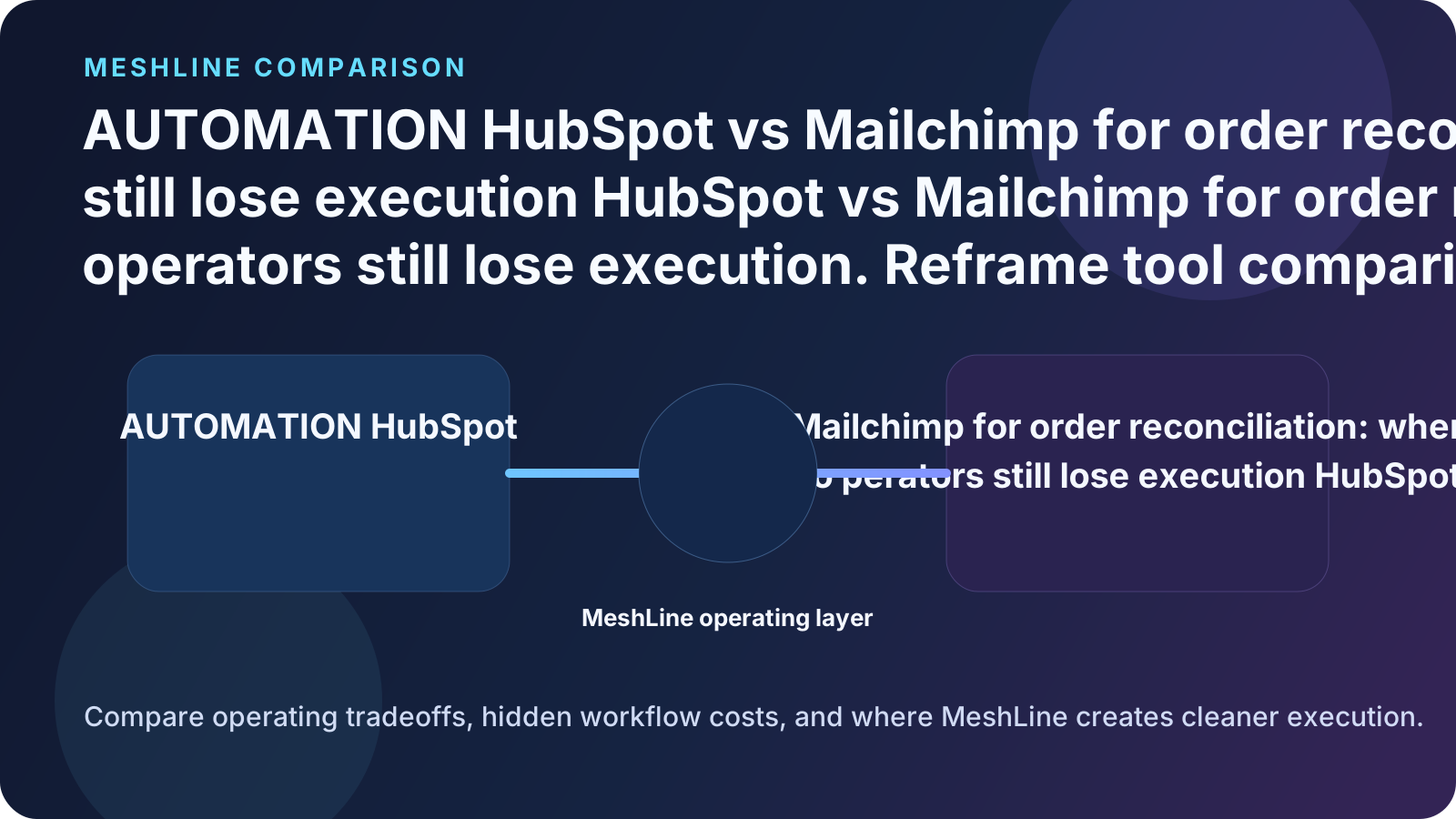
HubSpot vs Mailchimp for order reconciliation: where operators still lose execution
The real problem with hubspot vs mailchimp for order reconciliation is not configuration complexity alone. It is the invisible coordination load that appears when teams try to move work between HubSpot and Mailchimp, spreadsheets, inboxes, and approvals without one operating layer. That friction slows response times, weakens reporting, and leaves operations managers chasing status instead of moving the workflow forward. Meshline's view is simple: if people still need to manually advance the handoff, the system is not automated. It is only partially assisted.
That is why this article looks at hubspot vs mailchimp for order reconciliation through trigger-to-outcome execution rather than feature checklists. We will use hubspot mailchimp comparison and order reconciliation platform comparison as lenses, not as isolated tactics. The next category in this market is not another workflow builder. It is infrastructure that can observe the signal, decide the next step, execute the next action, and keep ownership visible.
Why order reconciliation still breaks in production
Comparison pages usually stop at features, pricing, or UX. But when teams compare HubSpot and Mailchimp for order reconciliation, the real question is different: where does execution still break after the software is installed? The answer is usually in routing logic, timing assumptions, exception handling, and cross-team ownership. Those are operating problems, not only tooling problems.
Instead of asking "Which tool has more features?" a better operator question is: "Which design removes manual coordination, reduces review latency, and keeps the outcome visible?" That is the shift from tasks to systems, and it is why infrastructure matters more than one more automation recipe.
Trigger, process, and outcome for order reconciliation
Meshline treats order reconciliation as one operating system:
- Trigger: the new signal enters the business through a form, ticket, event, payment, or CRM change.
- Process: the workflow enriches context, validates the record, routes the next action, and escalates only the exceptions.
- Outcome: the business gets a reliable result, cleaner reporting, and a shorter time-to-decision.
This framing matters because it exposes the hidden coordination tax. When HubSpot and Mailchimp are connected only by brittle point logic, the trigger is visible but the process is opaque. Operators do not know what happened, what failed, or who owns the next move. An execution layer fixes that by making the path explicit, observable, and repeatable.
A practical operating design
1. Capture the trigger once
Start with one canonical intake pattern. For order reconciliation, that means deciding which event actually matters, which fields are authoritative, and what should happen in the first thirty seconds. Teams that skip this step usually create duplicate records and stale context because multiple tools are allowed to disagree.
2. Normalize the process around decisions
A durable system should separate intake, validation, enrichment, routing, approval, and exception handling. That makes the workflow easier to change later without rebuilding everything. It also improves readability for operators because every stage has one job and one owner. This is where an operating layer or execution layer creates leverage instead of more noise.
3. Review exceptions, not every task
Here is the catch: the best automated systems still leave room for human judgment, but only at the right points. Teams should review exceptions, policy changes, and quality risks. They should not spend their time moving data, forwarding context, or manually triggering the next step. That is exactly where coordination drag turns into cost.
4. Measure outcome quality
If the workflow is healthy, operators should be able to see cycle time, failed handoffs, retry patterns, and approval delays in one place. That market trend matters because more teams now have enough tools; what they lack is a live view of execution quality across those tools.
What strong teams document before rollout
A rollout only stays reliable when the team documents field ownership, timing assumptions, exception paths, approval points, and retry behavior before the workflow goes live. This is where many implementations lose momentum. They automate the happy path, but they do not document what should happen when records are incomplete, when two systems disagree, or when an operator needs to intervene quickly. The result is an execution layer that looks elegant during setup and becomes fragile during change.
The better pattern is to keep one short operating playbook for order reconciliation. That playbook should show the trigger, the decision points, the fallback rules, the alert path, and the expected business outcome. It should also show which metrics matter: queue age, resolution speed, handoff quality, duplicate prevention, and the cost of rework. That level of documentation is not overhead. It is what lets the workflow survive scale and team turnover.
Practical examples to borrow
For example, a team running order reconciliation across HubSpot and Mailchimp can separate the pipeline into intake, normalization, routing, approval, delivery, and analytics. Another team may prefer an exception-first model where only low-confidence events surface to operators. Both approaches can work if the ownership rules are explicit. The practical difference is not whether the software can send a payload. It is whether the system keeps moving when data quality changes, volumes increase, or someone edits the workflow six weeks later.
A useful checklist here is simple: can the team explain the next action without opening five tools, can they identify who owns the exception, can they replay a failed event, and can they prove the business outcome improved? If the answer is no, the workflow may be active but the operation is still fragile. That is exactly the kind of hidden friction Meshline is built to remove.
Public examples and what to inspect
Public product pages and customer evidence can help teams understand how each platform describes its strengths, but they should not be mistaken for an operating model. Review the official pages below, note how each vendor frames the workflow, and then ask what still requires coordination after the integration is switched on.
Checklist for a publishable order reconciliation system
- Define one source of truth for the trigger and the authoritative fields.
- Decide which exceptions deserve operator review and which should auto-resolve.
- Add rollback and retry logic before increasing workflow volume.
- Keep third-party references and implementation notes documented for future audits.
- Measure whether the process reduces coordination work instead of just moving it somewhere else.
Where Meshline fits
Meshline is not a generic automation platform, and it is not another dashboard layered on top of tool sprawl. It is Autonomous Operations Infrastructure: an operating layer built to execute order reconciliation from trigger to outcome with visibility, ownership, and control. That means the system can coordinate HubSpot and Mailchimp without asking operators to be the glue between each step. Reframe tool comparison around execution quality and orchestration, not feature checklists.
This is also where the category story becomes useful. The future of this market will be won by systems that manage execution quality, not by tools that simply make it easier to assemble more disconnected tasks. The next category is infrastructure that can run the business process, monitor the state, and adapt without losing operator trust.
Final takeaway
If your current stack still depends on people to reconcile data, forward context, or manually push the next action, the workflow is not finished. It is only partially automated. The practical next step is to redesign order reconciliation as one system, then use see the engine structure to map the bottlenecks, approvals, and ownership boundaries that still create friction.