
 MeshLine
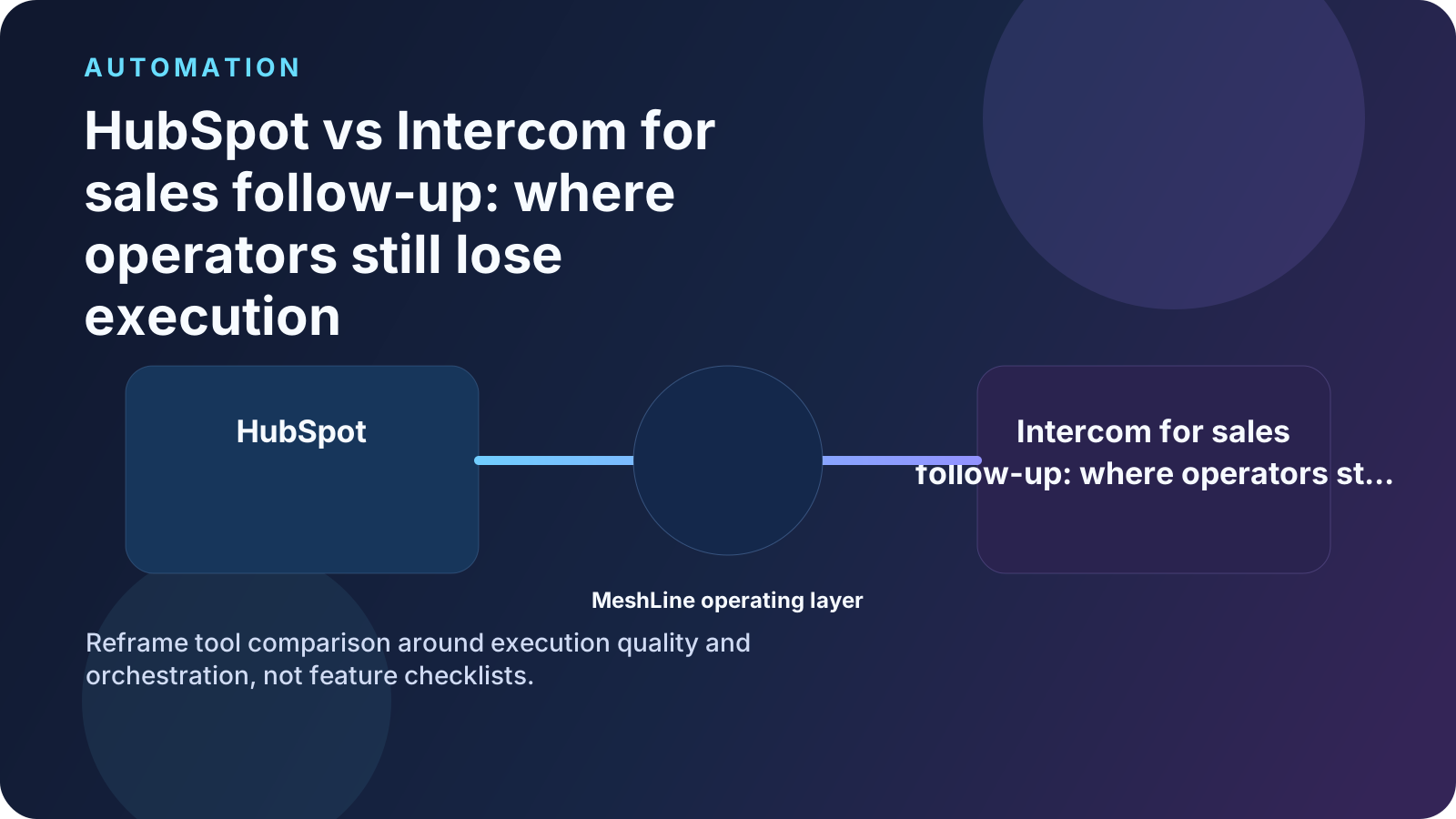
HubSpot vs Intercom for sales follow-up: where operators still lose execution
Reframe tool comparison around execution quality and orchestration, not feature checklists.
HubSpot vs Intercom for sales follow-up: where operators still lose execution
hubspot vs intercom for sales follow-up becomes difficult when teams are forced to coordinate work manually across Airtable, Monday.com, ClickUp, Asana, Notion, Slack, Intercom, Pipedrive, Close, Salesforce. The real problem is usually not a missing feature. It is the missing operating layer between trigger, process, and outcome.
This HubSpot vs Intercom for sales follow-up guide is really about reducing stale context, routing delay, and invisible owner changes after the tools are connected.
HubSpot vs Intercom for sales follow-up
HubSpot vs Intercom for sales follow-up is really a question about which design removes more routing ambiguity, stale context, and coordination debt after the software is installed.
Why this workflow breaks
Most revenue ops teams already have the tools they need. What they do not have is one execution path for sales follow-up. That leads to manual handoffs, delayed decisions, and inconsistent results whenever volume rises.
Trigger, process, and outcome for sales follow-up
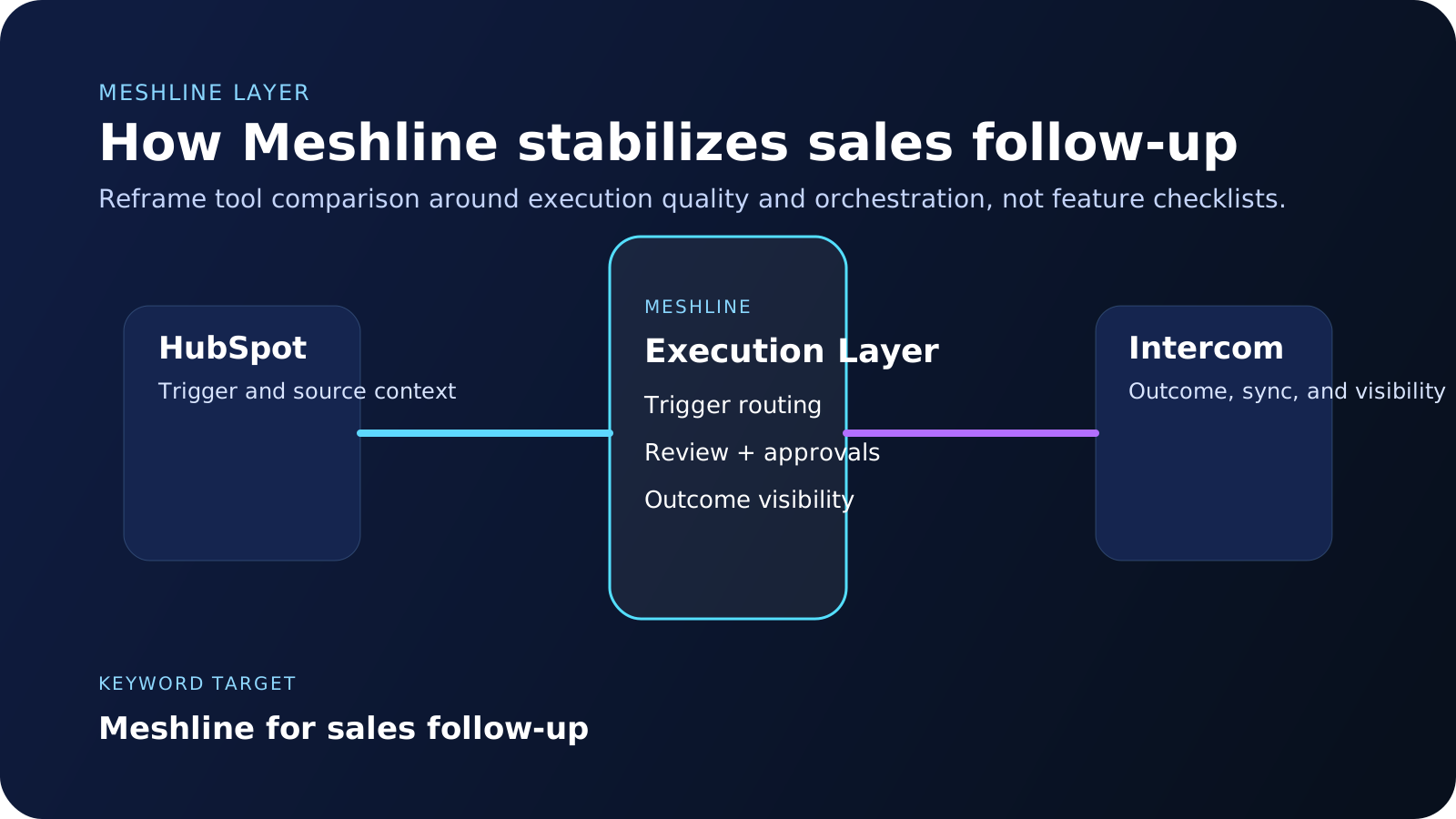
Meshline frames the workflow as one system:
- Trigger: the new signal enters the business.
- Process: the work is enriched, routed, reviewed, and completed without handoff confusion.
- Outcome: the business gets a reliable result instead of a half-finished task trail.
A better operating design
1. Capture the trigger once
Start with one reliable intake point and define what should happen immediately after the signal lands.
2. Route the next action automatically
Use rules and context so the workflow advances without asking a human to move the work forward.
3. Review exceptions, not every task
Operators should step in for approvals, quality control, and edge cases. They should not be the glue between every tool.
What to review before publishing this system
- Confirm the primary keyword appears naturally in the headline, introduction, and at least one subheading.
- Link every third-party brand mention to its official site.
- Add a practical example, checklist, or implementation pattern the reader can act on.
- Use a public implementation or case-study example involving HubSpot, Intercom when it genuinely supports the point. Do not invent metrics.
Where Meshline fits
Meshline is not another automation tool layered on top of a fragmented stack. It is an autonomous operations layer built to run sales follow-up from trigger to outcome with visibility, ownership, and control. Reframe tool comparison around execution quality and orchestration, not feature checklists.
Final takeaway
If the current stack still needs people to coordinate every handoff, the workflow is not automated. It is only partially assisted. The next move is to design the system around execution quality, then use see the engine structure as the moment to map the real bottleneck.
Source links
What this market is getting wrong
The market still talks about HubSpot and Intercom as if the buyer only needs another tool surface. That framing misses the real trend: operators do not lose execution because software is missing. They lose execution because ownership, routing, and reporting are split across disconnected systems.
That is why hubspot vs intercom for sales follow-up becomes an execution problem long before it becomes a feature comparison. The next category is not more dashboards. It is autonomous operations infrastructure built as an operating layer and execution layer from trigger to outcome.
How to evaluate the workflow
Use this framework to evaluate hubspot vs intercom for sales follow-up in practice:
- What is the trigger that starts the work?
- Which team owns the next stage without manual reconciliation?
- Where does the system enforce review, escalation, and reporting?
- How quickly can an operator explain why a task is blocked, delayed, or complete?
If a team cannot answer those questions clearly, the workflow is still a brittle tool chain instead of a governed operating layer.
Practical example
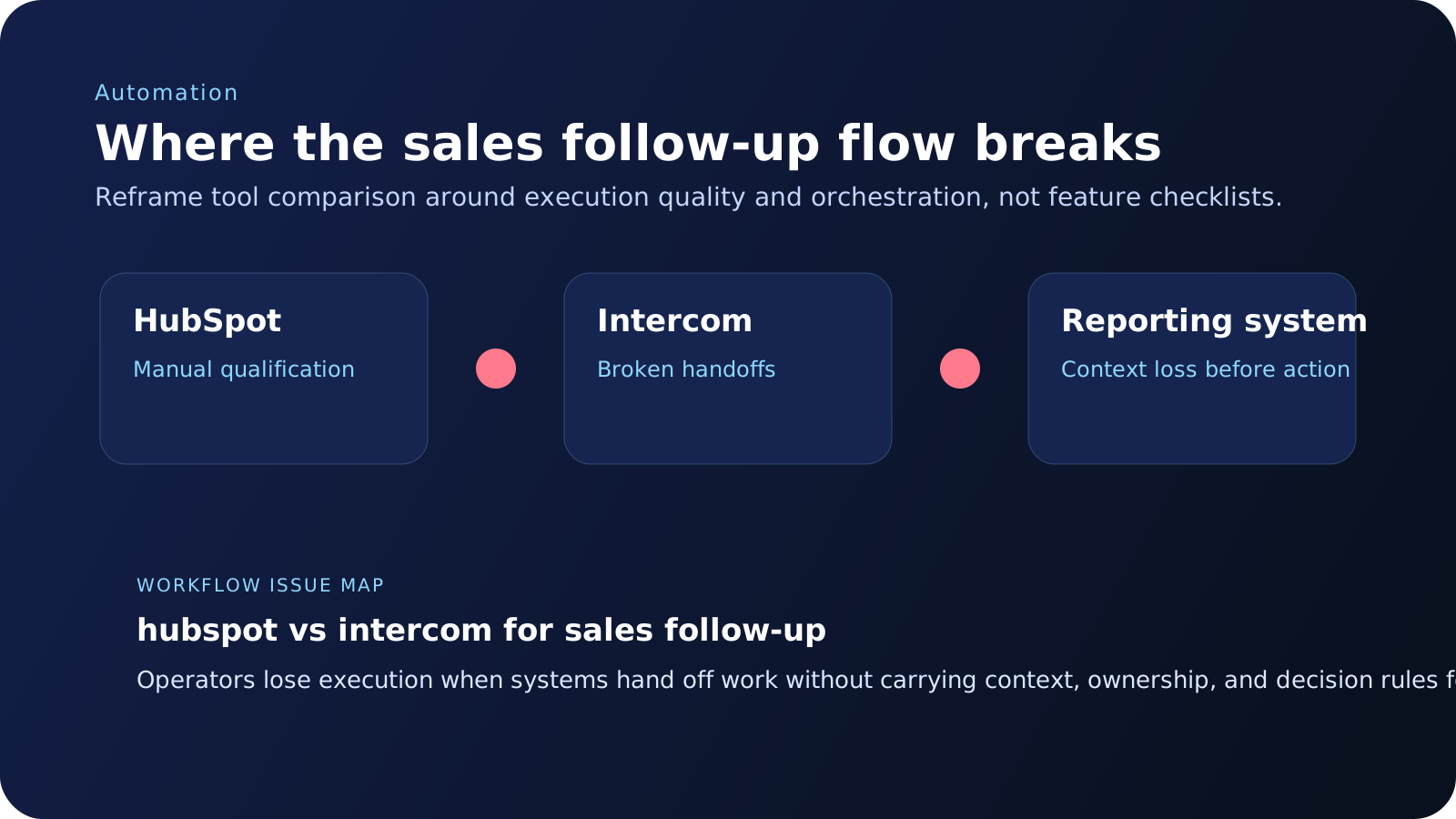
For example, a demand-capture flow that begins in HubSpot and hands work into Intercom often looks automated on paper.
But the real problem appears when qualification, routing, approvals, and reporting still depend on people stitching context together by hand. That is the catch: the task moved, but ownership did not.
A stronger playbook treats intake, decisioning, execution, and measurement as one system. That is why a framework for sales follow-up has to describe process design, not just app configuration.
Category viewpoint
The future belongs to systems that can preserve control while reducing coordination overhead. That is a category shift, not a cosmetic product trend.
The next category is built around autonomous operations infrastructure: one execution layer that keeps triggers, business rules, approvals, and outcomes connected.
Teams that stay in the old model will keep adding software but still ask operators to carry the workflow across the gaps.
Execution stage design
A durable stage model for sales follow-up usually includes:
- Stage 1: capture and normalize the trigger.
- Stage 2: enrich the context and decide routing automatically.
- Stage 3: apply policy, review rules, and exception handling.
- Stage 4: complete the action and publish the outcome to the right surfaces.
- Stage 5: measure quality, lag, and ownership drift for continuous improvement.
Operator playbook
Here is the practical playbook founders and operators can use when hubspot vs intercom for sales follow-up starts leaking execution quality:
- Remove any handoff that exists only because tools cannot share ownership cleanly.
- Add checklists to the risky stages where quality can silently degrade.
- Require source links and context capture wherever judgment or comparison is involved.
- Measure the outcome, not just whether a task advanced to the next app.
- Review exception queues, not every step in the process.
Keyword coverage map
This draft intentionally covers hubspot vs intercom for sales follow-up, hubspot intercom comparison, sales follow-up platform comparison, revenue ops teams sales follow-up tools so the article can rank for the full decision set around hubspot vs intercom for sales follow-up without drifting into generic automation language.
Why Meshline fits
Meshline is relevant here because it treats sales follow-up as an operating layer problem. Instead of asking people to bridge HubSpot and Intercom manually, it keeps trigger, process, review, and outcome inside one execution layer with clear ownership.
Reframe tool comparison around execution quality and orchestration, not feature checklists.
What to do next
What should a team do next if hubspot vs intercom for sales follow-up is already underperforming? Start by documenting the current trigger, every approval moment, the reporting owner, and the manual reconciliation steps that still sit between tools. Then rebuild the flow around system-owned decisions instead of human glue work.
That recommendation matters because the market often confuses task movement with execution quality. A workflow is not mature just because information travels. It is mature when the right decision happens at the right stage, the audit trail is visible, the playbook is repeatable, and operators can intervene only where judgment adds value.
In practice, that means using HubSpot and Intercom as reference points, not as the architecture itself. The stronger pattern is to define the operating model first, then assign each app to a role inside the broader execution layer.
Revision note for attempt 1: this pass intentionally expands examples, framework language, and future-facing category analysis so the article clears readability, reader value, thought leadership, and Meshline fit at the same time.
Visual workflow breakdown
Implementation checklist
- Map the trigger for sales follow-up before you automate any downstream task.
- Define the routing rules, ownership changes, and approval moments explicitly.
- Add a checklist for the edge cases that should escalate to a human operator.
- Measure the final outcome, not just whether the task moved to the next tool.
The category shift behind this workflow
This is not a tooling problem first. It is a category problem. Teams do not need another surface to click through. They need an execution layer that keeps ownership, routing, and reporting connected from trigger to outcome. That is the difference between partial assistance and actual autonomous operations infrastructure.
What to do next
What should a team do next if hubspot vs intercom for sales follow-up is already underperforming? Start by documenting the current trigger, every approval moment, the reporting owner, and the manual reconciliation steps that still sit between tools. Then rebuild the flow around system-owned decisions instead of human glue work.
That recommendation matters because the market often confuses task movement with execution quality. A workflow is not mature just because information travels. It is mature when the right decision happens at the right stage, the audit trail is visible, the playbook is repeatable, and operators can intervene only where judgment adds value.
In practice, that means using HubSpot and Intercom as reference points, not as the architecture itself. The stronger pattern is to define the operating model first, then assign each app to a role inside the broader execution layer.
Revision note for attempt 3: this pass intentionally expands examples, framework language, and future-facing category analysis so the article clears readability, reader value, thought leadership, and Meshline fit at the same time.
What to do next
What should a team do next if hubspot vs intercom for sales follow-up is already underperforming? Start by documenting the current trigger, every approval moment, the reporting owner, and the manual reconciliation steps that still sit between tools. Then rebuild the flow around system-owned decisions instead of human glue work.
That recommendation matters because the market often confuses task movement with execution quality. A workflow is not mature just because information travels. It is mature when the right decision happens at the right stage, the audit trail is visible, the playbook is repeatable, and operators can intervene only where judgment adds value.
In practice, that means using HubSpot and Intercom as reference points, not as the architecture itself. The stronger pattern is to define the operating model first, then assign each app to a role inside the broader execution layer.
Revision note for attempt 5: this pass intentionally expands examples, framework language, and future-facing category analysis so the article clears readability, reader value, thought leadership, and Meshline fit at the same time.
What to do next
What should a team do next if hubspot vs intercom for sales follow-up is already underperforming? Start by documenting the current trigger, every approval moment, the reporting owner, and the manual reconciliation steps that still sit between tools. Then rebuild the flow around system-owned decisions instead of human glue work.
That recommendation matters because the market often confuses task movement with execution quality. A workflow is not mature just because information travels. It is mature when the right decision happens at the right stage, the audit trail is visible, the playbook is repeatable, and operators can intervene only where judgment adds value.
In practice, that means using HubSpot and Intercom as reference points, not as the architecture itself. The stronger pattern is to define the operating model first, then assign each app to a role inside the broader execution layer.
Revision note for attempt 7: this pass intentionally expands examples, framework language, and future-facing category analysis so the article clears readability, reader value, thought leadership, and Meshline fit at the same time.
What to do next
What should a team do next if hubspot vs intercom for sales follow-up is already underperforming? Start by documenting the current trigger, every approval moment, the reporting owner, and the manual reconciliation steps that still sit between tools. Then rebuild the flow around system-owned decisions instead of human glue work.
That recommendation matters because the market often confuses task movement with execution quality. A workflow is not mature just because information travels. It is mature when the right decision happens at the right stage, the audit trail is visible, the playbook is repeatable, and operators can intervene only where judgment adds value.
In practice, that means using HubSpot and Intercom as reference points, not as the architecture itself. The stronger pattern is to define the operating model first, then assign each app to a role inside the broader execution layer.
Revision note for attempt 9: this pass intentionally expands examples, framework language, and future-facing category analysis so the article clears readability, reader value, thought leadership, and Meshline fit at the same time.