
 MeshLine
Carrier Tracking Automation: How to Connect Status Events to Support
How to connect carrier tracking automation to support workflows so teams see delivery state, risk, and customer context in one place.
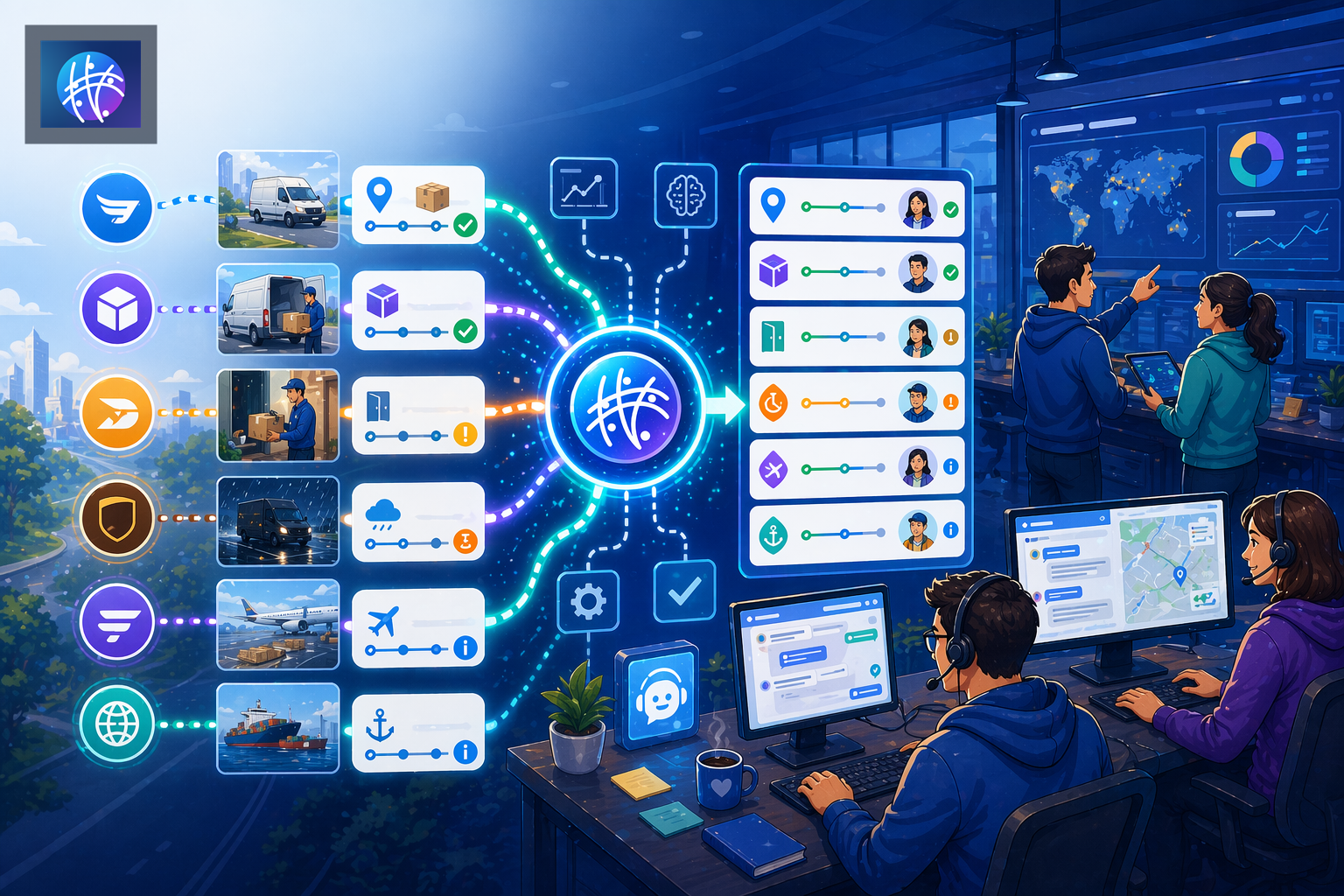
Carrier Tracking Automation: How to Connect Status Events to Support
carrier tracking automation matters when ecommerce teams need shipment state to become a useful operating signal, not another tracking link buried in an order record. The practical question is simple: when different carriers use different status names, but support needs one standard language for customer responses, should the team wait for a customer to ask, or should the workflow already know what happened, who owns the exception, and what message should go out next?
carrier tracking automation in a real ecommerce workflow
Carrier tracking automation for support status events
Keyword coverage map
This article covers carrier tracking automation so the article can rank for the broader automated shipment tracking cluster while still giving operators practical examples and workflow detail.
This guide also covers carrier status automation, carrier event workflow, connect carrier tracking to support, carrier webhook automation. The goal is not to make shipment tracking sound more complex than it is. The goal is to show where manual tracking stops working and where a reliable tracking workflow starts giving customers, support, and operations the same delivery truth.
A useful public reference is OnTrac tracking, because it shows how shipment state can enter the business from a carrier or platform. But a raw status event is only the start. Teams also need to decide which events update customers, which events update support context, and which events should pause the workflow for review. Other systems such as Royal Mail tracking API and Sendle tracking show how fragmented the delivery layer can become once multiple carriers, customer touchpoints, and support queues are involved.
Trigger, owner, exception, and outcome
The trigger is a carrier event updates tracking status, delivery estimate, location, or exception reason. That event should not disappear into a carrier page or a disconnected email. It should become a structured workflow event that the business can route, inspect, and measure.
The owner is equally important: operations owns carrier status normalization and support owns response priority. Without that ownership line, shipment tracking turns into vague accountability. Support thinks fulfillment owns it. Fulfillment thinks the carrier owns it. The customer only sees confusion.
The exception path is where the workflow earns trust: events with unknown status, missing ETA, conflicting location, or repeated failed attempts require human review. Normal movement can stay automated, but risky movement needs visible review. The outcome is the reason to build the workflow at all: support can act on standardized shipment state instead of interpreting each carrier separately.
A practical example
Imagine different carriers use different status names, but support needs one standard language for customer responses. A weak workflow sends a tracking link and waits. A stronger workflow captures the status event, normalizes the carrier language, checks the order promise, looks for an open support conversation, and decides whether the customer should receive a normal update, a proactive apology, or a human-reviewed recovery path.
This is why Pitney Bowes tracking API and 17TRACK API are worth looking at as operating references. The strongest teams do not just expose tracking. They turn tracking into customer context, support triage, and operational evidence. The difference matters because customers rarely care which system produced the status. They care whether the business knows what is happening.
What breaks when shipment volume grows
The first failure mode is stale status. A label exists, but the package has not moved. A carrier has a scan, but the storefront has not refreshed. A delivery is delayed, but support still sees the happy path. If the workflow treats all of those as normal, customers become the monitoring system.
The second failure mode is over-messaging. Teams sometimes compensate for poor visibility by notifying customers at every tiny movement. That can create more anxiety, not less. A good workflow separates useful updates from noise and keeps the customer message aligned to the moment.
The third failure mode is missing exception ownership. Delivery problems are cross-functional by nature. Support needs language. Fulfillment needs carrier follow-up. Finance may need refund or replacement visibility. The workflow should show who owns the next action before the customer escalates.
How to design the workflow
Start by mapping the shipment states that matter: label created, picked up, in transit, delayed, attempted, out for delivery, delivered, damaged, returned, and unknown. Then decide which states are informational, which are customer-facing, and which are exceptions.
Next, normalize carrier language. Different carriers use different status names, but your support and operations teams need one shared operating vocabulary. A delivery exception should not mean ten different things depending on the carrier feed.
Finally, route only the meaningful exceptions. A package moving normally should not create work. A package stalled for two days, attached to a VIP customer, or tied to a replacement promise probably should. That is where automated shipment tracking becomes a control surface rather than a notification feature.
A deeper carrier tracking automation rollout example
Consider a team running 2,000 monthly shipments across direct-to-consumer orders, marketplace orders, replacements, and returns. The old process looks manageable until the same customer conversation touches a carrier scan, a warehouse note, a storefront order page, and a support macro. In that moment, the issue is not whether the business has tracking data. It is whether the data has been turned into a decision path that a person can trust.
A stronger carrier tracking automation rollout starts with one event contract. Every shipment event should carry the carrier, tracking number, order ID, customer ID, current state, previous state, timestamp, promise date, and exception reason when one exists. Those fields sound basic, but they are what let support see the story without performing detective work. They also let operations measure whether the workflow is reducing confusion or simply moving it into a different tool.
The first implementation week should be intentionally narrow. Pick one carrier, one storefront, and one support queue. Route normal delivered and in-transit events automatically. Route stalled, attempted, damaged, unknown, and return-to-sender events into a review queue. Then review twenty real cases with support and fulfillment. Did the automation message the right customer? Did it pause when it should? Did it expose enough evidence for the operator to act? If the answer is no, the workflow needs better policy, not more volume.
What most teams misdiagnose
Most teams think the shipment tracking problem is missing visibility. Sometimes that is true, but the more common issue is missing operational interpretation. A carrier page can say a package is delayed. That does not tell the business whether to notify the customer, open a replacement, wait another day, or escalate to fulfillment. The operator-grade version of carrier tracking automation makes those decision boundaries explicit.
The second misdiagnosis is treating all exceptions equally. A late scan on a low-risk domestic order is different from a failed delivery on a high-value order promised for an event date. A workflow that treats them the same will either over-escalate or under-serve. The useful system weighs customer context, promise date, order value, shipment age, and support history before deciding what happens next.
The third misdiagnosis is assuming automation removes ownership. It should do the opposite. Good automation makes ownership visible. Fulfillment owns carrier evidence. Support owns customer response. Finance owns refund or replacement policy. Operations owns the rule that decides when the case moves from automated update to human review. Meshline is built around that operating-layer idea: the workflow should show the owner, the reason, and the outcome instead of hiding them behind disconnected notifications.
Operator scorecard
Use this scorecard after launch:
- WISMO ticket volume before and after automation
- percentage of shipment exceptions routed before the customer asks
- average time from carrier exception to support context update
- number of duplicate delivery conversations per order
- percentage of cases where the first support response includes the correct shipment state
- refund, replacement, and reship decisions tied to shipment evidence
- number of failed or stale tracking events that needed replay
If those metrics improve, the workflow is doing more than sending notifications. It is turning shipment movement into Autonomous Operations Infrastructure: a system that observes the signal, routes the next action, preserves review state, and helps the business deliver a cleaner customer experience with less manual coordination.
Where Meshline fits
Meshline fits when shipment tracking becomes a trigger-to-outcome workflow across ecommerce, fulfillment, support, and reporting. Meshline is not trying to replace the carrier or the storefront. It gives operators an execution layer above those systems so shipment events can become routed decisions, visible exceptions, and better customer outcomes.
For teams working with automation data sync, normalization, support triage copilot, shipment tracking is part of a larger operating model. The same pattern that routes delivery exceptions can also route returns, refunds, inventory mismatches, and support escalations. The category shift is from sending updates to running the delivery workflow with ownership and control.
QA checklist before rollout
- Which shipment states should customers see automatically?
- Which states should route to support before a customer asks?
- Which carrier events need normalization before they can be trusted?
- Which exceptions require fulfillment, support, or finance ownership?
- Can agents see the latest shipment state without opening carrier tabs?
- Does reporting show delivery risk, not just shipped order count?
- Can the team replay or inspect failed shipment updates?
Final takeaway
carrier tracking automation is not just about sending a tracking link. It is about turning shipment movement into a useful business workflow. The next step is to map the trigger, owner, exception path, and customer-facing outcome for the shipment states that create the most confusion. Once those rules are visible, automation can reduce support load without making the business feel less human.